Showing posts with label Annotated Bibliography (1). Show all posts

Tuesday, November 15, 2016

Karee's Annotated Bibliography (1)

I am interested in the psychology of self-identity. I will specifically be looking at the characters of Hamlet and Laertes as they search to defining themselves after tragic events (specifically the loss of their fathers). The big focus will be on how these characters act and perceive themselves based on what they feel others expect of them. I am currently think of doing a play on Polonius's advice to his son for the title: "To Which Self Be I True?" My thesis will be something like: Future leaders, such as a prince, should have a firm understanding of his identity because his future is made for him, however, Hamlet and Laertes's different reactions to tragedy prove that there is more to an identity than simply a future.
Performances
McDaniel, J.T., "Yet Here, Laertes (Polonius) (Act I, Scene III)," YouTube, 19 November 2015, Accessed on 15 November 2016, <https://www.youtube.com/watch?v=kPr6Y_9sZQQ>
J.T. McDaniel is simply reading the part of Polonius to his son from act 1 scene 3. The inflections and tone of J.T. McDaniel are that of a loving father, a stark difference from Hamlet's father as portrayed in the version posted by Michael S. Mills. This will be helpful when analyzing the important role parents have in their child's self-identity.
MichaelSMills, "Hamlet Act 2 Scene 1," YouTube, 7 March 2011, Accessed on 6 November 2016, <https://www.youtube.com/watch?v=Xi7zsBBPOiQ>
A transition between Hamlet's silique and Polonius talking to Reynoldo about visiting Laertes. I find this version of Hamlet, particularly in act 2 scene 1 when Polonius talking to Reynoldo and asks him to "inquire of his behavior," to be particularly interesting because it shows that Polonius cares about his son's behavior and probably about his character too, which I will be able to use as proof that Polonius seems to have cared more about his son and encouraged him to be true to himself. 

Media or informal online sources 

Hameed, Khalid, "Copy of Hamlet: Identity Crisis," Prezi, 17 April 2013, Accessed on 14 November 2016 <https://prezi.com/b8ey475g00r3/copy-of-hamlet-identity-crisis/>


This is an excellent source because Khalid has gone through and has information about identity crisis and then proof that Hamlet did have the setting and the symptoms of identity crisis after the death of his father. Khalid's recognition of Hamlet's multiple character roles in the play are proof that Hamlet was asking questions about who he should be and what his purpose was.


Lavoie, Sarah, "Self Identity: Theory & Definition," Study.com, Accessed on 15 November 2016, <http://study.com/academy/lesson/self-identity-theory-definition-quiz.html>


This goes through the simple explanation of self-identity and some of the factors that can affect how one perceives him or herself. "What makes self-identity so tricky is that we evaluate ourselves as humans based on how we believe we are supposed to feel and how we are supposed to act according to our society. . . . Critical thoughts can affect our self-esteem and how we think of ourselves." I will be able to use this source to go into self-esteem and possibly compare Hamlet's reaction to his father's death to how Laertes responds to the death of his father. 

Malloy, Mina, "Laertes: Foil to Hamlet," YouTube, 15 December 2014, Accessed 15 November 2016, <https://www.youtube.com/watch?v=ZOaTJr2HZRU>

This is a quick summary and character analysis of Hamlet and Laertes. I will probably use parts of Mina's comparison of the two characters as I am analyzing how they respond to tragedy.


Continue Reading...

Abby's Annotated Bibliography (1)


My paper is going to look at naming and labeling in Shakepeare’s Romeo and Juliet, and Julius Caesar. I’m going to analyze how naming/labeling affects perception, incites emotion, and in turn motivates violent behavior. My working title is currently: “What’s really in a Name?” and my working these is developing into something such as, “Although not everyone who engages in slurring naming and labeling has violent intentions, naming and labeling contribute to the larger cultural issues of discrimination and violence because they incite extreme emotions. This relationship is evidenced through the deaths of Tybalt and Mercutio in Shakespeare’s Romeo and Juliet, as well as Caesar’s murder and subsequent rebellion of the city in Shakepeare’s Julius Caesar.”

Social Sources:
Peer. Stephanie Funk. I posted a question concerning my developing paper on Facebook and she sent me a personal message in response. Stephanie has been married to my cousin for about 4 years, and we are not particularly close because they live in Arizona and are a few years older than me. She graduated from ASU with an English degree 2 years ago, so she is fairly educated in Shakespeare, the effects of rhetoric, and critical theory. She is also a politically active democrat and willing to discuss the effects of language by the candidates in this past election.
Homie. Leif Nielson. Husband. I bounce around pretty much all of my major project ideas with my husband. He is a math major, Portuguese minor at BYU, and I am an English education major, digital humanities minor at BYU. He provides different perspectives that I wouldn’t normally consider or agree with, and is willing to question my ideas in order to promote critical development.
Expert. Dr. Roni Jo Draper. Professor of Education at BYU. Dr. Draper taught my multicultural education for secondary education class last semester, and I work as her TA for that class this semester. She is very approachable, and I was able to bring up the topic of my paper in one of our discussions about working with the class. She is particularly passionate about multicultural issues, and the subject of how language relates to violence is connected to what we talk about with the class.

Media/Informal Online Sources:
Bradner, Eric. “Trump to supporter’s harassing minorities: ‘Stop it’” CNN, Nov. 2016, <www.cnn.com/2016/11/13/politics/donald-trump-60-minutes-first-interview/index.html>. Accessed 14 Nov. 2016. This article showed president-elect, Donald Trump’s reaction to post-election violence. This source is relevant to my developing claim as it shows that Trump may not personally promote violent behavior, but he has no intentions of adopting different rhetoric or tone.
Roueche, Michael J. “Shakespeare’s Julius Caesar: Or is it the Tragedy of Brutus?” Sept. 2013, <www.michaeljroueche.com/2013/09/shakespeares-julius-caesar/>. Accessed 15 Nov. 2016. This post is from a historical fiction author’s blog, and he gave a brief review of the play. This source is relevant to my paper because I plan to incorporate the idea that Shakespeare named the play after Julius Caesar when it was really about Brutus. He also brought up the themes of envy, flattery, manipulation, integrity, and honor, and I can work those in as factors that contribute to perception.
Continue Reading...

Mary's Annotated Bibliography (1)

My paper is going to take a detailed look at Shakespeare's plays and online informal analysis, particularly through Tumblr.  I would like to compare the position of these unknown critics to the common critics that appear within the plays themselves.  My working title is something along the lines of "The Voice of 'Common' Critics in Shakespeare and on Tumblr."  My thesis is developing into something such as, "Although internet criticism is often looked down on as the expression of the uninformed masses, the role of the common people in Shakespeare's plays and the intelligent analysis of his plays through websites such as Tumblr demonstrate that these sources are important to new interpretations and understandings of these familiar works."

2. Performances

Movieclips. "Henry V (6/10) Movie CLIP - If His Cause Be Wrong (1989) HD." YouTube. 22 April 2015, <https://www.youtube.com/watch?v=rv7NsGCDVDs>.
This is a clip of the Kenneth Branaugh Henry V, where the king is talking to his soldiers in disguise.  This scene in one of those I plan to reference in exploring the more common voices in Shakespeare's play.

goodticklebrain.  "'St. Crispin's Day' speech in Original Pronunciation."  Good Tickle Brain 25 October 2015, <http://goodticklebrain.tumblr.com/post/131876408532/st-crispins-day-speech-in-original>.
Here, a blog owner was able to get someone to read the "St. Crispin's Day" speech in the accent that it might have originally been performed in.  This recording will help me demonstrate how social media helps others to confer in analyzing Shakespeare's works in casual and professional ways.

4.  Media Sources

goodticklebrain. Good Tickle Brain,< http://goodticklebrain.tumblr.com/>.
This blog is a center of comics based on Shakespeare's works that sometimes satirizes and dissects the themes of his plays.  It is full of examples of how social media, specifically Tumblr, is a place for important informal analysis, which will aid my point.

incorrectshakespeare. Incorrect Shakespeare Quotes, <http://incorrectshakespeare.tumblr.com/>.
Another blog, this site uses satire and meme culture to critique Shakespeare's plays.  I can also reference this blog when looking at how social media allows for critique from voices that might otherwise be ignored.

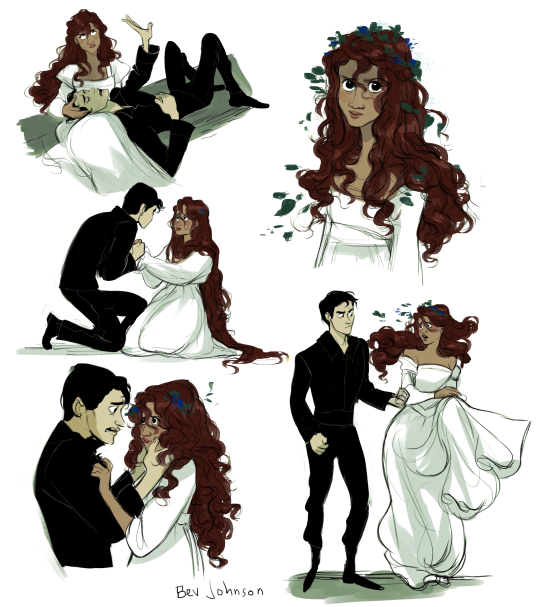
bevsi. "hamlet&ophelia." Bev Johnson. 6 March 2016, 11:46 PM, <http://bevsi.tumblr.com/post/140611037266/hamletophelia>.
Here is an artists depiction of Ophelia and Hamlet that provides interesting insight into their relationship through gesture and expression.  I can use this as one example of how someone not associated with studies in literature was able to publish a detailed analysis in the mode of informal art.


Continue Reading...

Isaac's Annotated Bibliography (1)

     I am writing about synthesizing ideas of teaching Shakespeare, namely combining elements of performance with elements of film and social media. My ideal contribution would be for students to produce performances of their own acting in scenes, film them, and publish them in a social media-type format, allowing other students to comment and analyze each scene together. It would be beneficial to have different groups perform the same scene, so that interpretations would be different, and more discussion could occur. My working thesis: Although there are many approaches to studying Shakespeare, students would most likely benefit from synthesizing these different techniques; specifically, students would benefit from filming their own performances of a Shakespearean scene, and publishing the filmed version on a social media platform, where other students could contribute to the discussion in both literary and performance critical perspectives.

Informal Online Sources:

Dunn, Alyssa. “Teaching Shakespeare's Macbeth.” Teaching Shakespeare's Macbeth, Alyssa Dunn, 14 Feb. 2014, www.slideshare.net/alyssadunn543/teaching-shakespeares-macbeth?qid=9420a867-cd9f-4d72-a60b-222f1e8736a0&v=&b=&from_search=2.

     This is a slide-show presentation about teaching Shakespeare (specifically, MacBeth) through integrating technological platforms. These platforms include podcasts, blogs, Facebook, online resources, Shakespeare apps, and Youtube. This slideshow would be beneficial in providing examples of teachers who are already integrating technology, and find it useful enough to share it with others. I wonder if I could contact this teacher and find out if she has found some platforms to be more beneficial than others.

Sheehy, Mr. “How to Teach Shakespeare to High School Students: A Few Basics from One Who Does It.” A Teachers Writes, A Teacher's Writes, 29 Nov. 2012, ateacherswrites.wordpress.com/2009/03/04/how-to-teach-shakespeare-to-high-school-students-a-few-basics-from-one-who-does-it/.


     This online blog presents different tips to teaching Shakespeare. These tips include reading the play out loud (which would be covered in my idea of performance), paraphrasing difficult passages, focusing on key lines, not hiding any part from the students, and emphasizing the importance of Shakespeare. This resource could help me in explaining how diverse teaching techniques are and how many of these ideas would be encompassed in a synthesized study of Shakespeare. 

Traditional Scholarly Sources

Rodes, David. “Teaching Shakespeare with Examples from Film.” Pacific Coast Philology, vol. 33, no. 2, 1998, p. 112. JSTOR [JSTOR], doi:10.2307/1316841.

     This resource suggests that using film is an important and invaluable resource for teachers in our age of luxury. We have so many different options to choose from in exposing our students to Shakespeare. This is an important resource to use when talking about embracing emerging technology (including social media platforms), but he also mentions including many different interpretations, and the importance of doing so. This would help bolster my argument of having multiple students perform (and thereby interpret) the same scene differently. 

Beehler, Sharon A. “To ‘Eche out Our Performance with Your Mind’: Making Performance Pedagogy Intellectually Sound.” Journal of the Rocky Mountain Medieval and Renaissance Association, vol. 18, 1997, pp. 201–209. ProQuest, humanities.byu.edu.erl.lib.byu.edu/rmmra/pdfs/18.pdf.

     This is an amazing resource for my paper. It lays out deficiencies that teachers have, and has sufficient backing to make those claims. For instance, it claims that teachers focus too much on audio/visual resources (in contrast with the above article about Shakespeare and Film), and have forgotten about performance. It supports the idea of reading in seeing and acting. It also promotes the idea of becoming both a literary critic, as it relates to Shakespeare, and a performance critic. I could use many different ideas that are presented here, either to nuance my argument, or to support the more synthetic idea behind my argument.

Heller, William. Teaching Shakespeare in the Inner -City Fifth -Grade Classroom using Drama -in -Education, Theatrical Production, and Technology Integration: An Action Research -Based Case Study, New York University, Ann Arbor, 2005. ProQuest, http://search.proquest.com.erl.lib.byu.edu/docview/305466187?accountid=4488.

     This is a dissertation about the study of drama in fifth-grade classrooms. It integrates both ideas of performance, and also technology, in teaching fifth-graders about Shakespeare. This is a good resource all around. It will be interesting to connect this to high school teaching since there would obviously be a difference. It also mentions how performance is creative (I would like to find another source connecting this to creativity in learning), how it would be collaborative, and therefore more beneficial to learning, how technology lends itself to better performance, and how social media opens up the possibility of a global community audience. There are many good ideas in this article that I plan to utilize. 

Shamburg, Christopher, and Cari Craighead. “Shakespeare, Our Digital Native.” The English Journal, vol. 99, no. 1, Sept. 2009, pp. 74–77. JSTOR [JSTOR], www.jstor.org/stable/40503332.

     This is perhaps the most fitting article that I could have found, since it seems to synthesize the same ideas that I am trying to synthesize. He presents a similar argument to my own, although a little different. I haven't decided how to use this source, either to disagree slightly (to suggest a slight difference be made), or to use it as an example of work that is already happening in this field. This would also be a good source to link to videos that I want to use as support from media/performance. 


     All of these sources tend to agree with my proposition in one way or another. The reason behind this is because there are few, if any, articles that recommend no performance or technology in reading Shakespeare. If scholars do not recommend these techniques, they tend to be silent in denouncing them. I would like to find nuance within these sources, however. I think that I have done that in suggesting a synthesis of ideas, but I would like to do more research to see if there are scholars that I can disagree with. Altogether, I am excited to continue working on this paper. 

Continue Reading...

Blogroll

About