Showing posts with label shakespeare. Show all posts

Friday, November 18, 2016

Brett's Annotated Bibliography (2)

Iago: A Genuine Precursor to Milton’s Satan?

It has been claimed that Milton based Satan from Paradise Regained off of Shakespeare’s Iago, from Othello. Although I agree that these characters are based off of a similar personality type, I believe that they tempt their victims with different rhetorical strategies: Satan deconstructs his enemy’s arguments while Iago constructs true temptations to look like positives. I am hoping to choose two speeches, one from Othello and one from Paradise Regained, that portray the true characters of Iago and Satan, then pair that speech with an image or video that portrays their true character. By looking at these artistic renditions, I will compare and contrast the rhetoric of each villain and how their arguments develop as their characters develop.

Scholar:
·         Canning, Albert Stratford George. Shakespeare Studied in Six Plays. London: T. F. Unwin, 1907. Shakespeare Online. 20 Aug. 2009. 16 Nov. 2016.  < http://www.shakespeare-online.com/plays/othello/othellovillain.html >.
o   “In Rossini's musical version of the terrible scene between Othello and his deceiver, the surprise and anxiety of the former and the subtle insinuations of the latter finally lead to a burst of fury, in which the feelings of the enraged dupe and the triumph of the vindictive Iago are vocally expressed with the full genius of the great composer. In Verdi's duet describing the same passage, the instrumental accompaniment expresses perhaps more than the voices the vehemence and passion of the scene, ending with the almost realistic sound of a fatal stab dealt by a murderous hand. Evidently Rossini and Verdi alike succeeded through their different styles in expressing the true meaning of the terrible scene by the attractive medium of their delightful art.”

·         Hytner, Nicholas. "Nicholas Hytner: With Shakespeare, the Play Is Just a Starting Point." The Guardian. Guardian News and Media, 12 Apr. 2013. Web. 16 Nov. 2016. <https://www.theguardian.com/culture/2013/apr/12/nicholas-hytner-shakespeare-play>.
o   It has often been noted that Iago's "motiveless malignancy" in fact comes, in his soliloquies, with a superfluity of motives, as if he himself has difficulty locating the source of his depravity. What Shakespeare has done, of course, is to pay his fellow actor the compliment of trusting him to complete Iago for himself. He provides the actor with a solid enough starting point: Iago is consumed by the promotion of Cassio. But thereafter, the play works overtime not to lock Iago down, and seems to invite the actor to allow himself to be surprised by what happens to Iago: a man driven by envy and hatred, who isn't fully in control of what happens next (as none of us is), to whom the action of the play occurs spontaneously – as life happens to all of us.

·         Morris, Sylvia. "Othello, Iago and the Search for Character." The Shakespeare Blog. The Shakespeare Blog, 17 Apr. 2013. Web. 15 Nov. 2016. <http://theshakespeareblog.com/2013/04/othello-iago-and-the-search-for-character/>.
o   “In his essay Michael Shurgot examines the great temptation scene, Act 3 Scene 3, concentrating on the dangerous section where Iago vividly describes Cassio’s dream. “The striking theatrical paradox of this scene [is that] the more deeply felt and convincingly performed the actor’s impersonation of Iago’s sexual longings, the more incredulous will be Othello’s failure to penetrate Iago’s mask; and the greater the risk that this segment of [the scene] will dissolve into a grotesque parody of Othello’s temptation and fall.””

·         Thaler, Alwin. “The Shakespearian Element in Milton.” PMLA, vol. 40, no. 3, 1925, pp. 645–691. www.jstor.org/stable/457565.
o   Similarities between Satan in Paradise Lost and Paradise Regained to Iago (659).
o   Othello, II, I, 201-202 vs. P.L. IV, 505-35
o   Othello, I, iii, 322, 344, 353 vs. P.R. 427-431

·         YaleCourses. "22. Paradise Regained, Books III-IV." YouTube. YouTube, 21 Nov. 2008. Web. 12 Nov. 2016. <https://www.youtube.com/watch?v=FLYpT2-jLU0>.
o   The poem is based on “this intellectual struggle to understand one’s identity” for Christ and Satan (4:03). This causes Satan to reach deep and argue from his soul.

Media:
Honoring Shakespeare
·         Adams, Chelsea. "Honoring Shakespeare: Othello's Iago as a Model for Milton's Satan in Paradise Lost." Web blog post. Team Milton. Blogger, 1 Nov. 2013. Web. <https://teammilton.blogspot.com/2013/11/honoring-shakespeare-othellos-iago-as.html?showComment=1479177382648#c710732424498424099>.
o   Bases Satan off of Iago because Milton looked up to Shakespeare in form and mindset.
o   “Milton’s first published poem was “On Shakespeare,” appearing in the Second Folio anonymously. The work, especially being Milton’s first published work, shows Milton’s reverence and honor for the greatest poet and playwright of his age” (1).

Christ Casts Satan Down Jesus & Satan
·         Christ Casts Satan Down. Digital image. Typology in Paradise Regained. Web. 14 Nov. 2016. <http://www.samizdat.qc.ca/arts/lit/preg_gm.htm>.
Othello and Iago  Image result for iago othello
·         Othello and Iago, from National Theatre. Digital image. Quotes Gram, n.d. Web. 14 Nov. 2016. <http://quotesgram.com/iago-from-othello-quotes/>.

Performances:
·         Ewan McGregor Talks about Iago. Perf. Ewan McGregor. YouTube.com. Custardflix, 17 Sept. 2008. Web. 12 Nov. 2016. <https://www.youtube.com/watch?v=0dF921GLl7g>
o   Iago gets carried away with the power and is on a mad power surge (1:27-1:45).
o   Shakespeare denies explanation to characters and audience because Iago has no rational explanation (2:14-2:28).

·         Othello: Iago and Othello. National Theatre. Perf. Adrian Lester and Rory Kinnear. YouTube.com. National Theatre Discover, 25 Sept. 2013. Web. 11 Nov. 2016. <https://www.youtube.com/watch?v=jyoCIwJn9Ic>.
o   Iago is disgruntled because he is Othello’s most trusted confidant and has seen the horrors of war with him.
o   Sees himself as slighted and therefore plays on the “sensitive and vulnerable and weak” parts of Othello’s character (4:12).
o   Iago sees his grievances as legitimate, and uses “subterfuge” and “insinuation” to fulfill his destructive plans (4:34).

Social:
Homie: Justin
·         My husband Justin and I watched an Iago soliloquy and a Satan soliloquy together, then discussed similarities and differences between the two. We came to the conclusion that in his “put money in thy pocket” speech (almost a soliloquy, but very representative of his rhetoric), Iago uses the temptations characteristic of Satan: riches, sexual desire, and revenge. Ian McKellen also speaks quietly and quickly, forcing his audience to listen without interrupting and without major focus. In his representation of Satan, Ian Richardson is also collected in the beginning—his argument is headed in a certain direction and he is very eloquent. However, the further along he gets, he loses clarity. Instead of tempting with “basic” temptations in order to build his side up, Justin claimed that Satan was attacking heaven. Rather than constructing the attractiveness of his own side (like Iago), Satan deconstructed the opposing side.
·         https://www.youtube.com/watch?v=lUBc8ydhbSM (Ian McKellen as Iago)
o   Calmly angry—able to channel his rage to get exactly what he wants
o   Speaks softly and quickly, doesn’t give his audience a long time to get upset
o   Blurs the lines between love and lust to make lust seem okay
o   Tempts using riches, revenge, sexual desire
·         https://www.youtube.com/watch?v=TqnvWQZlQ50 (Ian Richardson as Satan, speech in Book I of P.R.)
o   Calm and collected at the beginning, knows exactly where his argument is headed next. Builds steam as he goes on and gets very angry
o   “though few be lost, not all be lost” à expresses hope in himself and his temptations
o   Portrays Christ as the tyrant, “Tyranny of heaven”

Peer: Chelsea Adams, author of a blog post from Dr. Burton’s 2013 Milton class, now getting a Ph.D. in 20th century African Lit.
o   Extremely awesome for sending me an article that was unfortunately, ultimately unhelpful
o   “1. Look for research on the history of rhetoric for that time period (Meaning both when Shakespeare would have studied and when Milton would have studied.) I know that back when, the big controversy with rhetoric was that people would use it without regard to the morality of whatever it was they were using rhetoric to argue. As far as I can determine, this was a heated debate clear back in Ancient Greece. Looking at those "moral arguments" for not teaching rhetoric to everyone or using rhetoric to argue everything may be the key to unlocking the crux of your argument.”
Enthusiast: Amanda, author of Shakespeare-Online.
o   Emailed, no response yet.
Expert: Robert Means, HBLL librarian over English Language and Literature
o   Robert was helpful in pointing me toward some helpful research guides that I was unfamiliar with initially, and thus used incorrectly to search for articles.

o   “You’re correct . . . we don’t have a separate research guide for Milton (only Shakespeare for now). But, never fear, the Milton stuff IS out there: in the MLA Bibliography, JSTOR, etc., and in monographs (books) that you can find by searching the HBLL catalog.”
Continue Reading...

Wednesday, November 16, 2016

Leah's Annotated Bibliography (2)

Since Tuesday I have done some re-working of my title, my topic, and my thesis to make it more argumentative and interesting. So please please please let me know what you think!

New title: Human Condition: The Bard as the Basis for the Prime Directive and Other Ethical Beliefs in Star Trek

Thesis: Although many see Star Trek as a superficial science-fiction television show, the culture and popularity surrounding the franchise have come about because the basis of beliefs within the Star Trek universe can be attributed to the presence of William Shakespeare and his writings which portray the human condition and suggest that hope for humanity comes in recognizing ourselves in others.

Many of the sources that I discovered previously will still be helpful but I am still looking as I narrow my topic.

Social Sources: This is the source type that I'm having the most trouble with. I've tried contacting a lot of different people but haven't heard back from anyone.

Brian Rivera is an amateur actor who performed a video version of the "to be or not to be" speech in Klingon. I tried contacting him via twitter (the only contact information I could find) and have not heard back yet. I felt like his acting and interpretation of the Klingon translation of Hamlet would give him a very interesting perspective.

I also tried contacting Kyle Kallgren who is a pretty active YouTube video maker. He made several about the interesting connections between Shakespeare and Star Trek and I liked a lot of what he had to say. I also made an attempt to contact him and have not heard back.

Luckily my husband is what you can call a Star Trek enthusiast and he knows a lot more about it than I do so I've been able to use him to bounce off ideas for my thesis as well as asking him about sources online that he already aware of.

Informal Sources:

Letizia, Anthony. "Shakespeare and Star Trek." Geek Pittsburgh. N.p., 7 Aug. 2013. Web. 15 Nov. 2016. <http://www.geekpittsburgh.com/shakespeare/shakespeare-and-star-trek>.

This article discusses several of the connections between Shakespeare and Star Trek and contains quotes from an associate of a Shakespearean acting group. He touches on many of the reasons why people are drawn to both Shakespeare’s writings and Star Trek. The overarching themes connect with a lot of people. This is very helpful because he talks about how Shakespeare holds a mirror up to nature but also helps us to understand other people, the basis for the prime directive.


"The Noble Heart of Star Trek." The Noble Heart of Star Trek. N.p., n.d. Web. 15 Nov. 2016. <http://thenobleheartofstartrek.weebly.com/>.

This website is like a database of Shakespeare references within Star Trek. It was extremely helpful because it not only references canonical sources but also non-canonical sources that many trekkers agree to be useful in understanding the universe and how it is viewed.


Continue Reading...

Monday, November 14, 2016

Brett's Annotated Bibliography (1)

My working title is still rough, if anyone has suggestions I would love to hear them!
Shakespeare and Milton: Building characters who are easily portrayed in media

I am hoping to choose two soliloquies, one from Othello and one from Paradise Regained, that portray the true characters of Iago and Satan, then pair that soliloquy with an image that portrays their true character. By looking at these artistic renditions, I will compare and contrast the rhetoric of each villain and how their arguments develop as their characters develop.

Media:

Christ Casts Satan Down Jesus & Satan
·         Christ Casts Satan Down. Digital image. Typology in Paradise Regained. Web. 14 Nov. 2016. <http://www.samizdat.qc.ca/arts/lit/preg_gm.htm>.
o   Depicts Satan’s fall from the spires after Temptation 3, when he is at his prime of rhetorical ploys.
Honoring Shakespeare
·         Adams, Chelsea. "Honoring Shakespeare: Othello's Iago as a Model for Milton's Satan in Paradise Lost." Web blog post. Team Milton. Blogger, 1 Nov. 2013. Web. <https://teammilton.blogspot.com/2013/11/honoring-shakespeare-othellos-iago-as.html?showComment=1479177382648#c710732424498424099>.
o   Bases Satan off of Iago because Milton looked up to Shakespeare in form and mindset.
o   “Milton’s first published poem was “On Shakespeare,” appearing in the Second Folio anonymously. The work, especially being Milton’s first published work, shows Milton’s reverence and honor for the greatest poet and playwright of his age” (1).
Othello and Iago  Image result for iago othello
·         Othello and Iago, from National Theatre. Digital image. Quotes Gram, n.d. Web. 14 Nov. 2016. <http://quotesgram.com/iago-from-othello-quotes/>.
o   Depicts Iago looking sinister and wicked behind Othello. The lighting places him more in the shadow than Othello, and his eyes are not level with the camera, instead he is peering ominously up.

Performances:

Ewan McGregor talks about Iago
·         Ewan McGregor Talks about Iago. Interview. Ewan McGregor. YouTube.com. Custardflix, 17 Sept. 2008. Web. 12 Nov. 2016. <https://www.youtube.com/watch?v=0dF921GLl7g>.
o   Iago gets carried away with the power and is on a mad power surge (1:27-1:45).
o   Shakespeare denies explanation to characters and audience because Iago has no rational explanation (2:14-2:28).
Othello: Iago and Othello
·         Othello: Iago and Othello. National Theatre. Interview. Adrian Lester and Rory Kinnear. YouTube.com. National Theatre Discover, 25 Sept. 2013. Web. 11 Nov. 2016. <https://www.youtube.com/watch?v=jyoCIwJn9Ic>.
o   Iago is disgruntled because he is Othello’s most trusted confidant and has seen the horrors of war with him.
o   Sees himself as slighted and therefore plays on the “sensitive and vulnerable and weak” parts of Othello’s character (4:12).
o   Iago sees his grievances as legitimate, and uses “subterfuge” and “insinuation” to fulfill his destructive plans (4:34).


Continue Reading...

Monday, November 7, 2016

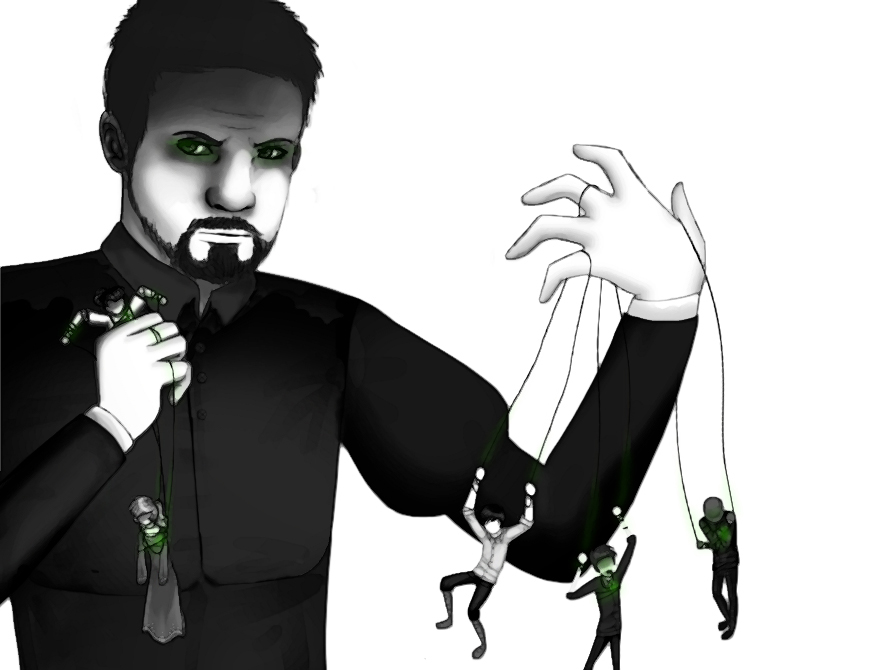
Satan or Iago? Gargoyle or Marionette?

Here, we see the complexities of Iago's arguments "tying" the
characters together and making them his pawns.

Here, we seen the "gargoyle" representation of Milton's Satan, which can symbolize the servitude of a lower class.
For my research topic, I have decided to do a rhetorical analysis and comparison of Iago from Shakespeare’s Othello and Satan from Milton’s Paradise Regained. These characters have been closely compared in literature, so I have struggled to find a new spin on things. However, I think that it would be interesting to look at the language they use and how their arguments grow increasingly complex as the plots develop. Not only does Shakespeare portray Iago as satanically evil, but some have claimed that Milton based his character Satan off of Iago. I think it would be interesting to compare the complexities of their arguments and how those have affected artistic renditions of them. Both characters are masters of rhetoric, and give stunning oratories that I plan to dissect with the intent of pairing with a particular visual scene. 


In my research on this topic, I have not only found some extremely interesting photos and drawings/paintings, but also some interesting articles. I did not previously know that Milton wrote “An Epitaph on the Admirable Dramatic Poet, W. Shakespeare”, or that from a young age Milton claims to be able to imitate Shakespeare’s writing style. These interesting finds are verifying my thoughts that the subject is well-touched upon, but I am excited to look further into the visual side of things. 
Continue Reading...

To Boldly Go Where No Bard Has Gone Before

My husband is obsessed with Star Trek. He can tell you all sorts of facts and details about the show that most people don't remember. He even spends most of his free time designing starships on his computer. Naturally, since we started dating I've had to learn to love Star Trek as well.

The writers of Star Trek frequently used Shakespeare's plays as inspiration for their episodes. There are a lot of scenes where they recite lines from plays, even acting them out. Other times the plot is based on a Shakespearean play. Even the titles of episodes are frequently a reference. The writers, creators, and actors of Star Trek are huge fans of Star Trek.

Patrick Stewart, Brent Spiner, and several other actors in Star Trek began their careers as actors in Shakespeare's plays. They may have had a hand in the large amount of Star Trek references that invade the culture.

Here is one the scenes where Captain Picard uses Shakespeare to save the mother of one of his crew members:


In one of the Star Trek movies, a Klingon character references Shakespeare and tells a member of Star Fleet that "you haven't experienced Shakespeare until you have read him in the original Klingon." This idea that Shakespeare could be an alien writer and that it can be enjoyed in other cultures makes Shakespeare's writing even more interesting in its popularity and timelessness.

I am having difficulty narrowing this topic because there are so many things that I want to write about amongst all of these connections. If I were to focus on one play that is referenced I would choose Henry V because it is included so interestingly included. Data, one of the main characters in the Next Generation, is an android. One of the themes that is included throughout the show is Data's journey to understand more about humanity. Captain Picard tries to help him understand by having him perform Shakespeare. One of the plays that he performs is Henry V. I think the use of Shakespeare in this way is very interesting. I'd really like more feedback to know if this is something I should pursue.

Continue Reading...

Coming at Truth Sideways: Carnivalization in Shakespeare

I have been troubled by the difficulty of defining the exact point of any one of Shakespeare's works. In high school, one of my friends told me the Bard was a fraud because his plots were "childishly simple." Perhaps. But for the last four hundred years, some of the best scholars in the world, and many of the uninitiated besides, have devoted time, energy, and, genuine passion to the process of interpreting his work in light of some new idea, always striving to find some new truth within his plays--or, at least, one of the old truths told differently. And they have produced thousands upon thousands of new takes, new ideas--all based on his works. Why? Why does his work with such silly, "childish" plots, lend itself to reinterpretation like nothing else?

I have decided, after all of an hour reading "Shakespeare and Carnival," edited by Robert Knowles, that I have the answer. Or, at least, part of an answer. Yes, the Bard's plots are simple. But Shakespeare takes great care within his works to give readers heteroglossia, or more than one expressed viewpoint. His heroes are flawed. His villains are often sympathetic. And the range of side characters, all of whom have opinions of their own (even lowly soldiers in Henry V), is remarkable. He creates dialogues so that there is never one way to see the situation, any situation, in his plays. In this way, Shakespeare questions the authority of all his characters as they repeatedly contradict each other, and often--with the comical and sometimes tragic inclusion of plays within his plays--he contradicts himself in true meta fashion.

This is called carnivalization, a word referring to the medieval festivals peasantry would throw, during which they lampooned the aristocracy with abandon while drinking altogether too much alcohol. Their celebrations often culminated with the crowning of a fool king to show the ultimate rejection of traditional authority. Shakespeare's obsession with ascending thrones reflects this tradition, and it emphasizes all the means with which he refused to provide one right answer. Through exaggeration,, sheer tumult of action, and what Phyllis Gorfain labels as a "recurrent pattern of momentum and interruption" which "assaults orthodox order" and reinterprets "reality through representation" (156), Shakespeare produces the aura of the carnival in which anything goes and nothing is what it seems. To simplify, Shakespeare is an author of shadows. His shadows define his light. There is a doubleness to his truths, a conversation even about the simplest of matters, from the Dauphin of France and his servant arguing over a horse, to Hamlet throwing a play depicting his father's assassination.

@creativecommons.org


In my paper, I am going to argue that Shakespeare used carnivalization to mock the authority figures of his world, but also to mock those like himself, who did the ridiculing. After all, do the lampooners within our modern society (think of SNL, internet chat forums, etc.) know the truth any better than those they mock? I doubt it. But in the formation of the dialogue, what is established? Merely that none of us imperfect mortals know which way is up. We're all faulty. We're all in shadow. And this paves the way for the element of the divine. This is why Shakespeare is so religious, why it's so easy--even in the most pagan of his works--to see Christ, God, and Christian values. Because he shows the absence of truth through carnivalization, he prepares his reader for the return of the true King.

Works Cited

Gorfain, Phyllis. "Play and the Carnivalesque in Hamlet." Shakespeare and  Carnival, edited by Robert Knowles, Macmillan Press, pp.152-176
Continue Reading...

Thoughts for my Students on Shakespeare, God, and the 2016 Election

The general education you are receiving at Brigham Young University is also called "liberal" education -- not to be confused with liberal politics, but coming from the idea that a broad education is liberating: it amplifies one's freedom. It allows one to reason better, and to be more understanding of and compassionate toward the many whose lives differ from our own.

Studying Shakespeare, in my view, aids us in being better citizens because his plays take up issues of ruling and the accountability of rulers (as is so evident in Henry V, or Richard II, as well as in Measure for Measure, etc.). The grievances of common people, the need to have unity among diverse groups, the ways we justify war or deal with issues of equality -- all are in play in Shakespeare's plays. And in very general terms, Shakespeare so often makes issues problematic, requiring us to debate and refine our views. All this is very good practice for being informed, thoughtful citizens.

Of course, you may be so weary of all the debating in this election cycle that you are ready to say "a pox on both your houses," as the dying Mercutio said in Romeo and Juliet.
But at BYU the general or liberal education we pursue is tempered and refined by gospel perspectives. When a liberal education is combined with Christian faith, it opens the range of our views and the reach of our patience.

Along these lines, I'd like to quote from author Max Lucado's recent opinion piece in response to the anxiety that so many have felt with respect to this election:

I have a prediction. I know exactly what November 9 will bring. Another day of God’s perfect sovereignty. 
He will still be in charge. His throne will still be occupied. He will still manage the affairs of the world. Never before has His providence depended on a king, president, or ruler. And it won’t on November 9, 2016. [...] 
Understanding God’s sovereignty over the nations opens the door to peace.... Rather than wring our hands we bend our knees, we select prayer over despair.  [Source] 

​In teaching the history of civilization often, I have come to the conclusion that it is important to be comfortable with the messiness of democracy. Democracy only works when it is partly failing and forever in a state of repair​. But like the Founding Fathers, we can exercise faith in the general goodwill of the better part of the people and their better natures. And as believers, we can trust in the ability of individuals and societies to repent and renew, and we can exercise faith in a sovereign and loving God whose peace defies any and all present troubles.
Continue Reading...

Thursday, October 27, 2016

Macbeth: Rated B for Blood... Lots of It (Like, Really--People Die Left and Right)

Sam and I were assigned to read Shakespeare's Macbeth and discuss it on Slack. While our Slack conversation addressed/covered a wide range of topics relating to theme, plot, meter, and rhetorical devices, we talked quite a bit about Macbeth's rather complex character: he's so violent, but so remorseful; so logical, but sometimes so irrational; so heroic, but so doggone evil. "Stars, hide your fires;  / Let not light see my black and deep desires: / The eye wink at the hand; yet let that be,/ Which the eye fears, when it is done, to see" (1.4.55-60). WHO IS THIS GUY?
Screenshot from my eBook--(1.7)
If I were to write a paper about Macbeth, I would want to explore his remorse--the instances where it almost seems like he is going to change and do the right thing... and then doesn't. I'd like to break down the different rhetorical moves in the text that influence his ultimate tragic downfall and see if there is some kind of pattern (i.e., I want to know which appeal--logical, emotional, credible--seems to work on him the most, thus helping me better understand his character). Some possible parts of scenes I could analyze are:
  • (1.7) Macbeth's thoughts laying out logical reasons (logos) for why he shouldn't kill Duncan: he'd damn his soul to hell, it's not nice to kill guests, and Duncan is a pretty good guy. He decides he won't do it.
  • (1.7) Lady Macbeth's attack on Macbeth's manhood (pathos) that drives him to change his mind.
  • (1.7) Lady Macbeth's explanation (logos) of how they can frame the murder on the guards. This kind of seems to set him at ease. Not at ease, but not as stressed. Well, he is still stressed because he's about to commit cold-blooded murder... I don't know. In the end he still does it.
  • (2.1) Macbeth has a vision of a bloody dagger that he claims is a representation of his dark thoughts (pathos/ethos?), possibly suggesting the murder is inevitable (or maybe it's a warning?). Either way, he goes through with it. 
  • (2.2) Macbeth is disturbed by the fact he couldn't say "Amen." This is depicting his accountability to God (ethos) and causes him to comprehend the seriousness of his transgression, racking his soul (pathos). 
  • (2.2) Lady Macbeth tells him not to think about his murders and it won't bother him as much (logos?). Yeah, good lucking sleeping with murder on your conscience... (But as far as we know, he does go back to bed... #somepeople)
That would be a great start, and there are tons more instances throughout the play that I could look at (such as when the ghost of Banquo pays him a visit). Heck, I could write a book on this. I would also analyze the form (iambic pentameter or prose) used to see if there is a connection regarding form and persuasiveness. Or is that too unrelated? I think I could tie it in. 

Types of research I would tie in are articles such as this one. It thoroughly explains the role of guilt/remorse and provides tons of solid examples. Some informal research could be this video from YouTube, or possibly this one (both from the Slack channel discussion). They show the dagger vision scene and how the vision impacts his decision.

What do you guys (well, girls and Chris, Garrett,and McKay) think? Suggestions?

Continue Reading...

Wednesday, September 14, 2016

Shakespeare's Brilliance Revealed in Simplicity

While Shakespeare's Sonnet 18 focuses on depicting beauty, and Sonnet 116 attempts to define love, at the center of each of the two poems is the concept of eternity. Sonnet 18 is rather explicit in revealing its theme—it uses the wording "eternal summer" and  "eternal lines." Sonnet 116 is slightly more subtle; it illustrates love as "an ever-fixed mark," "never shaken," and "not Time's fool."

However, where these two similarly-themed poems begin to sharply diverge is when the complexity of these lyrical compositions is analyzed. On one hand, Sonnet 18 is strung together with a creative, extended metaphor and vivid imagery; contrarily, Sonnet 116 is fairly plain. It's word choice is mostly unremarkable; its use of metaphor and imagery are seemingly dull and unimpressive, at least when compared to his other works; his usually strategically rhythmic iambic pentameter is arguably slowed to a near steady march.

This observation begs the question, if Sonnet 116 is so simple, why, then, is it one of Shakespeare's most popular sonnets? The answer lies in its curious simplicity—it is timelessly brilliant because of how it masterfully it captures the idea of a grand, eternal love with such rudimentary writing methods.


Diction 

Tucker Brooke observes, "Seventy-five percent of the words are monosyllables; only three contain more syllables than two; none belong in any degree to the vocabulary of 'poetic' diction." "Impediments," "alternation," and "remover" appear in the first four lines, but after that the words are short and common. None of the verbs Shakespeare uses (e.g., admits, bends, remove, come) are unusual. He uses the verb "alters" twice.

Brooke continues, "In short, the poet has employed one hundred and ten of the simplest words in the language... to produce a poem which has about it no strangeness whatever except the strangeness of perfection." While the words Shakespeare carefully placed aren't flashy in and of themselves, their expert placement, allowing them to flow naturally, is what is truly exceptional. For example, the line "sickle compass come," with the repetition of the harsh "c" sound, imitates the ticking of a clocking, symbolizing the passing of time. 

Imagery/Metaphor

SparkNotes points out that "Sonnet 116 is not remarkable for its imagery or metaphoric range." The imagery employed is comparable to Shakespeare's other sonnets (see Sonnet 130  for similar use of "rosy cheeks").


SparkNotes further comments, "Its major metaphor (love as a guiding star) is hardly startling in its originality." Apparently, this metaphor was quite common at the time, and it is surprising that Shakespeare would select such a well-known symbol rather than creating a new, original connection. Yet, we see his confidence in this symbol provide steadiness to his poem. 

In the third quatrain, Love and Time are both personified. Interestingly, Love is personified by what it isn't: a court jester at the beck of a ruler (Time). Time is represented by what appears to be  Grim Reaper-like figure; this interpretation is derived from the description of the "bending sickle." These metaphors were also well-understood during his lifetime—but what better way to represent death than a dark, hooded figure!

Meter

The meter in Sonnet 116 is more or less standard. Two lines have have eleven syllables (6 and 8), but other than that, it meticulously follows the rules of iambic pentameter, almost generating a march-like feel. The steady beat is consistent with the intent of the poem: to depict love as steady, unchanging, and eternal. It seems that everything about this poem, its word choice, its use of metaphor, and its meter were all perfectly crafted to contribute to its central theme.


Shakespeare was brilliant—Sonnet 116 is undeniable proof. Sometimes it isn't the hidden meaning in a text that the reader must laboriously extract until it surfaces that evidences an author's greatness; rather, it is the obvious meaning, set up so clearly that the reader cannot misunderstand, that solidifies an author's place in history.

*Images were found here*


Continue Reading...

Blogroll

About